
Merle Chow Chows – What You Need to Know (Important)
Written by Kenny Cook, BCCSDip.ProCanBhvPct, founder of Living With Chow Chows.
The short answer: Merle isn’t an accepted Chow Chow colour. A puppy with two Merle parents has a much higher risk of serious eye and ear problems, so we don’t recommend buying a Merle Chow Chow.
The Chow Chow is easy to identify compared to other breeds, and there are breed standards to guide how Chows are bred through the generations. Merle isn’t an accepted colour in the Chow Chow breed standard in the UK or the USA.
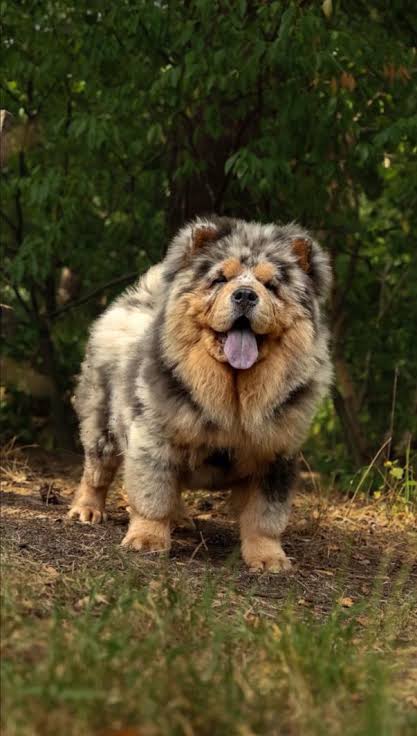
What is a Merle Chow Chow?
A Merle Chow Chow is a Chow that carries the Merle gene. It isn’t part of the breed standard, and there’s no documented history of Merle in the breed. Many breed experts believe it was introduced through crossbreeding. Merles are usually easy to spot. Their coat has patches of full colour on a lighter, diluted background. However, this is not always the case, as you’ll see with Cryptic Merles below.
What do Merle Chow Chows look like?
A Merle Chow’s coat stands apart from all other colour variations of the Chow’s breed standards (black, red, blue, fawn, cream, and certain variations of white). The most popular colour mix of a Merle Chow Chow is blue, black, and white, but it's not unusual to see a fawn, red, and white combination. Merle Chows tend to have darker patches scattered unevenly across a lighter coat, and dogs with two copies of the gene often have a lot of white. So the Merle usually looks spotted or marbled. Because of their colouration, Merle Chows are sometimes known as ‘Oreo Chows’.
Why do Merle Chows have a unique appearance?
The Merle Chow’s unique appearance is down to their genetics. They carry the Merle gene, which randomly lightens patches of dark pigment in the coat. This gives the Merle its patchy, mixed look. It’s a different gene from the one that makes blue and fawn Chows, which dilutes the whole coat evenly. Merle is dominant, so a puppy only needs to inherit one copy, from one parent, for the pattern to show.
Merle Chow Chows’ health issues (important)
The health problems linked to Merle come from the genetics, not environmental factors. A dog with one copy of the Merle gene is a heterozygous (single) Merle. A dog with two copies is a homozygous Merle (also called a double Merle). This usually happens when two Merles are bred together, and it means a much higher risk of serious health problems, particularly with their eyes and ears. Single Merles have a lower risk, but not no risk. In one 2009 study, around 3.5% of single Merles had some hearing loss, compared with 25% of double Merles.
The Royal Kennel Club says the same. Since 2020 it hasn’t registered Merle dogs at all in breeds like the Chow Chow, where the colour has no established history. We also asked owners of homozygous Merle Chows in our Facebook group, Chow Chow Community | The Home Of Chow Chows, about their experiences. (They were not initially informed by their breeder of the issues with Merle Chows.)
Health problems reported in homozygous Merle Chows
Hearing and vision problems are well documented in double Merles. These are the problems owners in our community have told us about. Please note that this is what owners reported, not a scientific study. Entropion, hip dysplasia and some of the other problems below are seen in Chows of every colour, and they aren’t known to be caused by the Merle gene.
Hearing impairment
Vision impairment
Entropion
Hip dysplasia
Liver problems
Heart issues
What you must know before buying any Chow Chow (important)
The Chow Chow looks just like a teddy bear or lion, so the breed is in high demand. Alongside this, some irresponsible breeders are not ensuring their Chow Chows are bred correctly and within Kennel Club standards. Some breeders are also not making potential buyers aware of their dogs’ genes.
There is a type of Merle called a Cryptic Merle. This is a Chow Chow that displays the visual characteristics of a breed standard Chow as described by the UK and American Kennel Clubs. Unfortunately, some breeders are either unaware of this genetic possibility, skip DNA testing, or don’t give buyers accurate information about the genetic makeup of their Chow Chows. This has led to the creation of homozygous Merle Chows, which has caused upset, heartbreak and, sadly, the loss of some dogs.
Always ask to see DNA test results before you commit to a puppy.
Our recommendation
As responsible Chow Chow owners who once lacked knowledge about this breed, we personally recommend you do not buy a Merle Chow Chow. From our own experience and the evidence above, you could be setting yourself up for a lifetime of heavy vet bills, heartbreak, and inconvenience. It’s important to understand that Chow Chows are brilliant, intelligent animals who feel emotional and physical pain just like us. So please, think of them when looking for a new companion.
If you already share your life with a Merle Chow, they’re every bit a Chow and deserve every bit as much love. Ask your vet about checking their hearing and eyes.
If we educate each other and share the word about Merle Chow Chows, we can combat this bad practice together and ensure Chow Chows have a good quality of life. And the Merle gene is an issue in other breeds too, not just Chow Chows.
Looking for help with your own Chow Chow? Take a look at our Chow Chow Foundations programme.
Merle Chow Chow FAQs
Are Merle Chow Chows healthy?
A single Merle (one copy of the gene) has a lower risk of problems, but not no risk. In one 2009 study, around 3.5% of single Merles had some hearing loss, compared with 25% of double Merles. A puppy with two Merle parents (a homozygous or double Merle) has a much higher risk of serious problems, particularly with their eyes and ears. We don’t recommend buying a Merle Chow Chow.
Is Merle an accepted Chow Chow colour?
No. Merle isn’t an accepted colour in the Chow Chow breed standard in the UK or the USA. The Royal Kennel Club also doesn’t register Merle Chow Chows.
What do Merle Chow Chows look like?
They usually have darker patches on a lighter coat, often in blue, black, fawn or red, and double Merles often have a lot of white. That spotted look is why some people call them ‘Oreo Chows’.
What is a Cryptic Merle?
A Cryptic Merle is a Chow Chow that carries the Merle gene but looks like a breed standard Chow. It’s one of the main reasons DNA testing matters.
How can I check a breeder’s dogs?
Ask to see DNA test results before you commit to a puppy. If a breeder can’t or won’t show them, walk away.