
Chow Chow Puppy: The Complete Guide to Raising Your Puppy
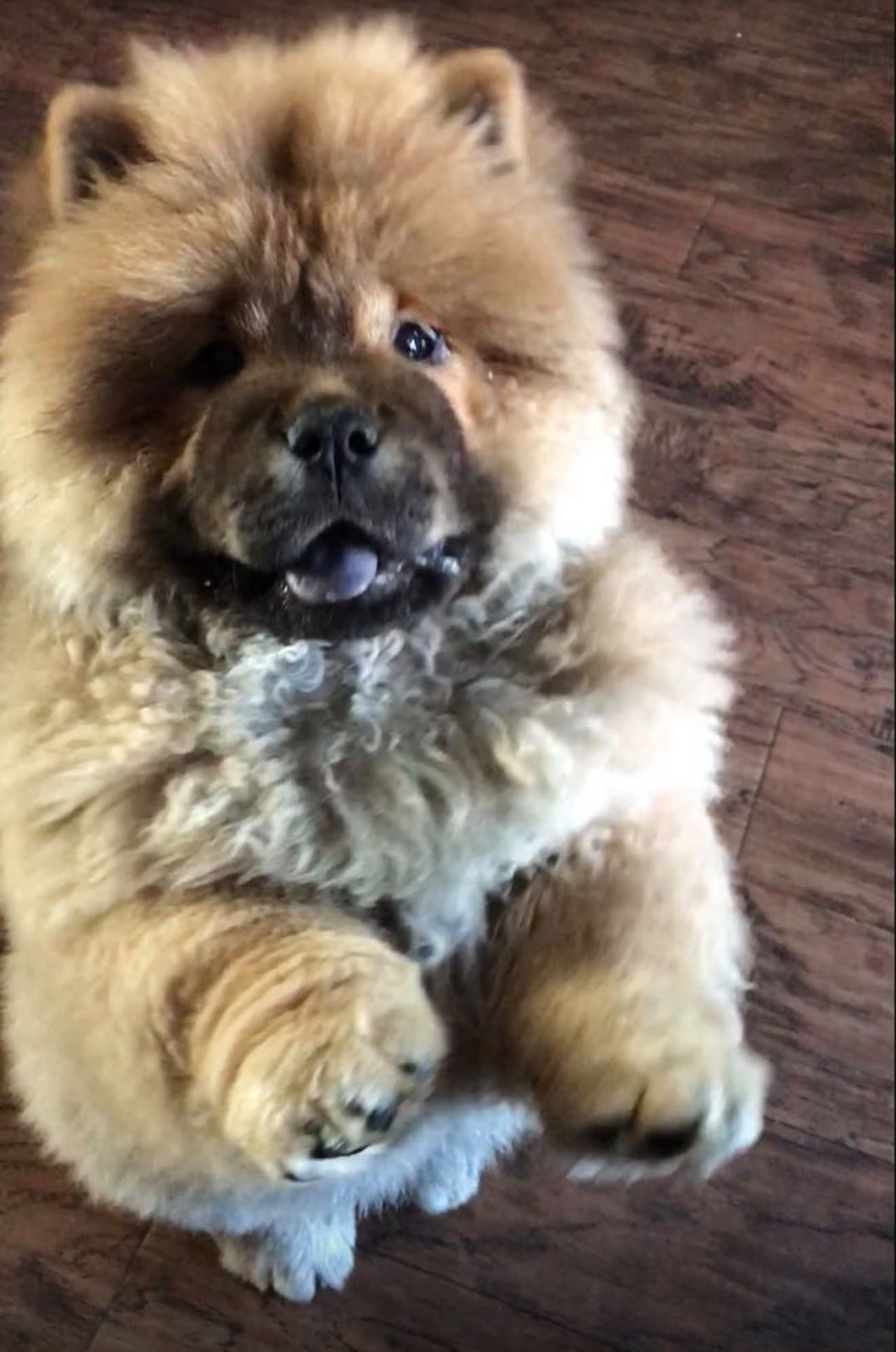
A Chow Chow puppy is one of the most beautiful things you'll ever see. A little fluffy bear with a blue-black tongue and a face you can't say no to.
And that's exactly why so many people rush it. They fall in love with a photo, buy the first puppy they find and only then start reading about the breed.
I've worked with over 50 Chows. The ones who struggle most later on usually had a rough start. Poor breeding, no health tests, not enough socialisation, or an owner who was told Chows are 'stubborn' and trained them with pressure.
This guide is here to give your puppy the opposite. Everything from finding a breeder to the first six months, in order.
In this guide
- Before you get a Chow puppy
- Breeder or rescue?
- Finding a good breeder
- Questions to ask (and red flags)
- What a Chow puppy costs
- Getting ready for your puppy
- The first night and first week
- Socialisation
- Toilet training
- Sleep
- Handling and grooming
- Feeding
- Health and vet care
- Training a Chow puppy
- Adolescence
Before you get a Chow puppy
Ask yourself honestly:
- Will you groom properly? Several times a week, for life, and daily in a moult.
- Can you plan around heat? Chows are a high-risk breed for heatstroke.
- Do you have time? Puppies can't be left for long, and the first few weeks are full on.
- Who's in the house? The PDSA doesn't recommend Chows for homes with small children.
- Will you train with rewards? Chows don't respond well to pressure.
If you're nodding along, brilliant. If any of those made you wince, read the full Chow Chow breed guide and is a Chow Chow right for you? first.
Breeder or rescue?
Both can be brilliant.
A puppy from a good breeder gives you health-tested parents, a known background and the chance to shape everything from eight weeks.
A rescue Chow, often an adult, gives a dog a second chance. You'll usually know their personality already, and good rescues will tell you about any health or behaviour needs. Read adopting a rescue Chow.
What I'd avoid is the middle ground. A puppy from someone who bred 'for the experience', from untested parents, sold online to whoever pays first.
Finding a good breeder
Good Chow breeders rarely need to advertise loudly. They often have waiting lists.
In the UK, start with the Royal Kennel Club's Find a Puppy service and the breed clubs. Royal Kennel Club Assured Breeders have to meet extra standards, and the PDSA recommends looking for one. Registration alone isn't a guarantee, so still ask every question below.
In the US, the AKC and the Chow Chow Club, Inc. (the national breed club) are good starting points. Ask to see OFA health results.
In FCI countries, contact your national kennel club and breed club.
The law in the UK:
- In England, Lucy's Law has been in force since 2020. It bans the commercial third-party sale of puppies and kittens under six months, so buy directly from the breeder. Wales and Scotland have similar rules.
- All dogs in England, Scotland and Wales must be microchipped by eight weeks old.
There's a full guide in how to choose a Chow Chow breeder.
Questions to ask (and red flags)
Ask:
- Can I see the puppies with their mum, at your home?
- What health tests have both parents had? Can I see the certificates?
- Have either parent, or close relatives, needed eyelid surgery?
- How are the puppies being socialised?
- What do you feed, and what will you send home?
- Is there a written puppy contract?
- Will you take the puppy back at any point in their life if things don't work out?
Health tests to look for:
- UK: Hip and elbow scores through the BVA/Royal Kennel Club schemes, plus an eye examination. The BVA advises breeding from dogs with hip scores below the breed median and an elbow grade of 0. That matters in Chows, because in the BVA's 2025 figures 64% of the Chows submitted for elbow grading showed some sign of elbow dysplasia.
- US: The OFA's CHIC programme for Chows lists hips, elbows, an eye exam, thyroid and patellas.
More in health testing for Chow Chows.
Red flags:
- You can't see mum, or you're asked to meet in a car park
- Several breeds for sale
- No health test results, or 'they don't need testing'
- Pressure to pay a deposit quickly
- Puppies available under eight weeks
- 'Rare' colours priced as a premium, especially merle. Merle isn't an accepted Chow colour and comes with its own health concerns. See merle Chows
- 'Teacup' or 'miniature' Chows. There's no such recognised variety
A good breeder will ask you just as many questions as you ask them. That's a great sign.
What a Chow puppy costs
The puppy. Prices vary a lot. When I checked in October 2026, Chow Chow listings on Pets4Homes ranged from about £250 to £4,500. A very low price is usually a warning sign, not a bargain.
Ongoing. The PDSA estimates at least £80 a month after the purchase and set-up costs, and up to £13,000 over a Chow's lifetime.
Set-up. Bed, crate or pen, bowls, collar, harness and lead, ID tag, grooming kit, toys and chews, puppy vaccinations, insurance and puppy classes. See choosing a collar, harness and lead.
Getting ready for your puppy
Before your puppy comes home:
- Puppy-proof. Crawl round the house at puppy height. Cables, shoes, medicines and anything toxic go up high. Here's my puppy-proofing checklist.
- Set up a safe area. A pen or gated room with a bed, water and chews.
- Register with a vet and book a check-up for the first few days.
- Agree the house rules. Sofa or not? Who feeds, who walks, which words you'll use?
- Book time off if you can, and plan cover for the weeks after.
The first night and first week
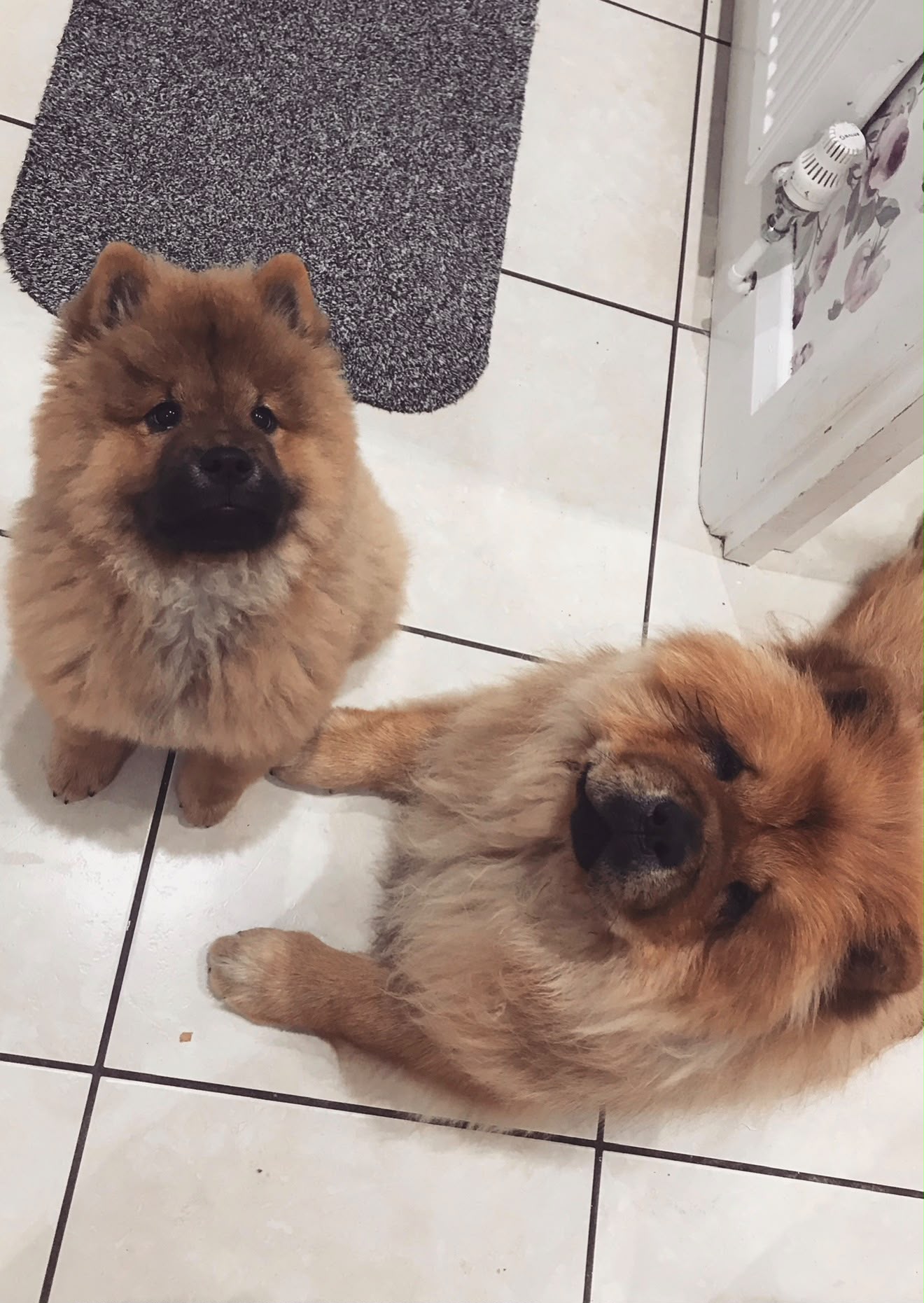
Your puppy has just lost their mum, their littermates and everything familiar. Expect some crying.
For the first night, keep them close. Many owners have the puppy's bed or crate next to their own bed for the first nights, then move it gradually. Take them out for a wee during the night if they wake.
For the first week, keep life calm and predictable. Short play, lots of sleep, gentle handling, a few new experiences each day, and the first tiny bits of alone time.
Step by step:
Socialisation
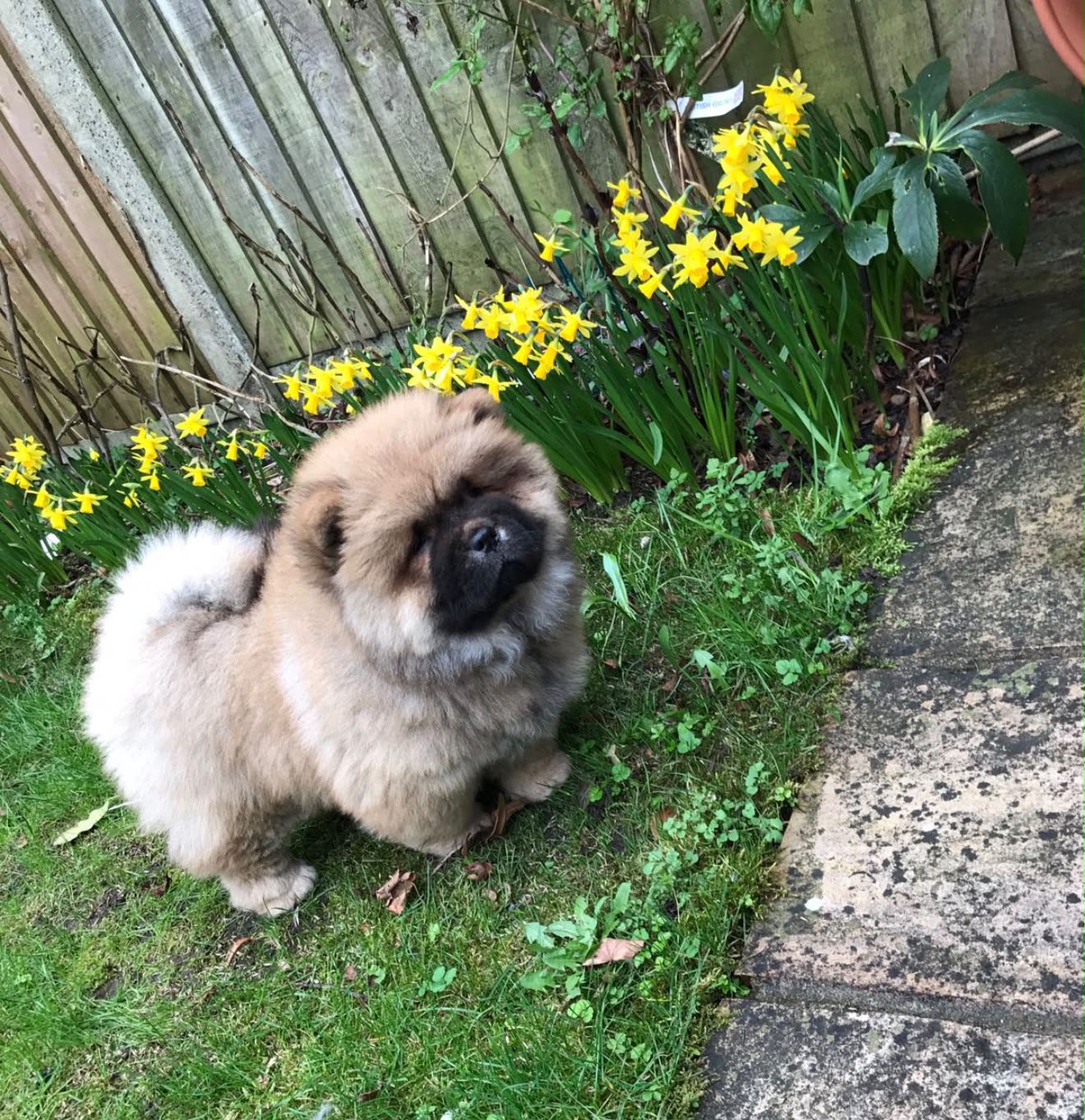
If you only get one thing right, make it this.
There's a window, roughly from 3 weeks to 12 to 14 weeks, when puppies learn most easily that the world is safe. The American Veterinary Society of Animal Behavior calls it the most important socialisation period in a dog's life. A good breeder starts it. You carry it on from the day your puppy comes home.
For a Chow, socialisation isn't about meeting everyone. It's about calm, positive exposure. People, places, sounds, surfaces, handling, other calm dogs. Seen from a comfortable distance, paired with good things, always at your puppy's pace.
Talk to your vet about how to do this safely before vaccinations are complete. Carrying your puppy, car rides and sitting on a bench watching the world are all great options.
Full plan: socialising a Chow Chow puppy.
Toilet training
The AKC notes that owners say Chows house-train easily, and many do. It still needs a plan.
- Take your puppy out after sleeping, eating, playing, and every hour or two when awake.
- Go to the same spot.
- Wait quietly.
- Reward straight away when they go, outside.
- Clean accidents with an enzyme cleaner, and never tell your puppy off. That just teaches them to hide.
Sleep
Puppies need a lot of sleep, much more than adult dogs. An overtired puppy bites more, cries more and learns less.
Build in plenty of nap times in a quiet space, and protect them. Read how much sleep does a Chow puppy need?
Handling and grooming
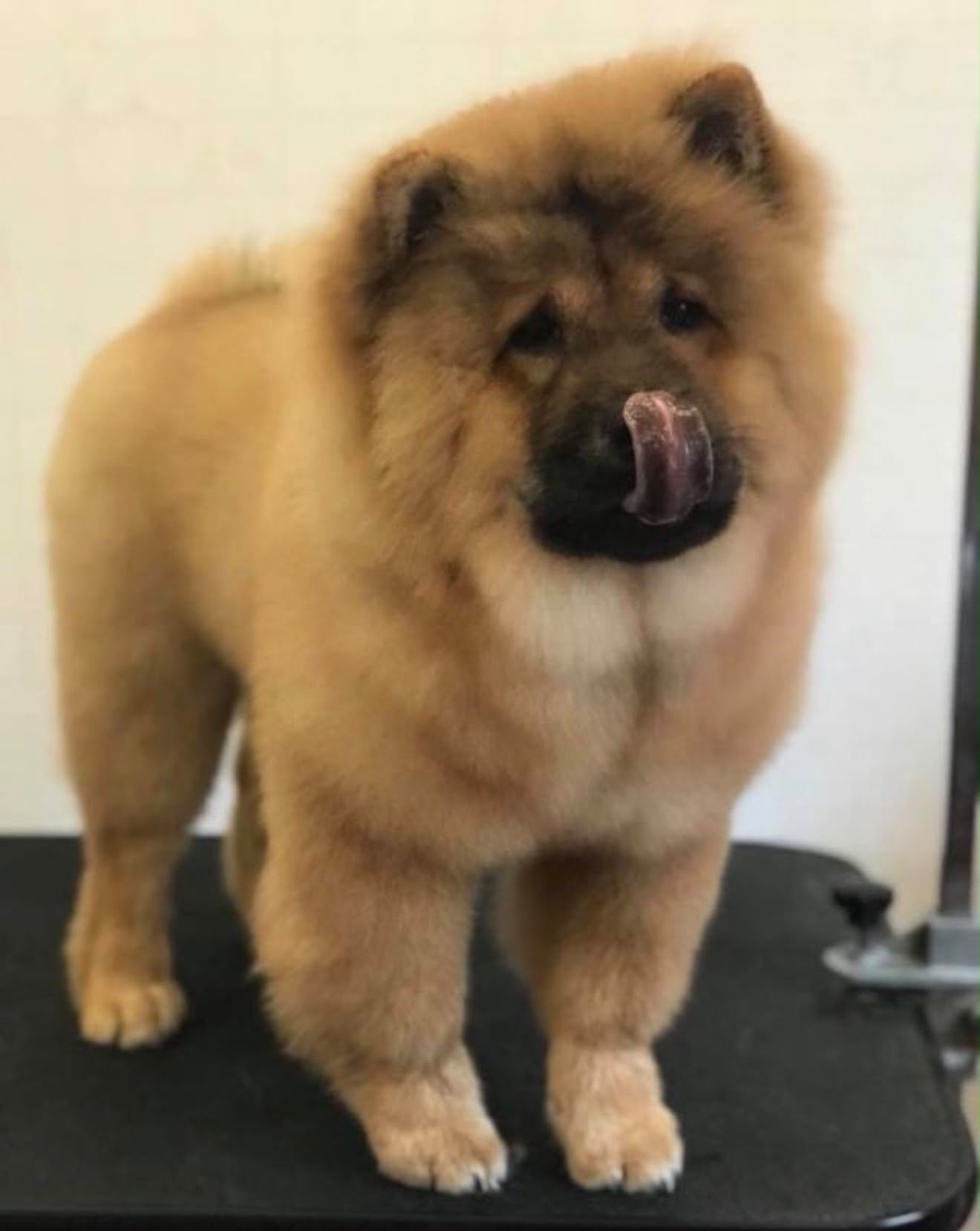
A Chow puppy's fluffy coat is easy now. The adult coat isn't. So use these months to teach that brushing, handling and checks are normal and pleasant.
Every day, for a minute or two:
- Brush a small area gently, then reward
- Touch paws, ears and mouth briefly, then reward
- Look in their eyes and lift a lip, then reward
Stop before your puppy has had enough. See handling your Chow puppy.
Feeding
Feed a complete, balanced puppy food suited to your puppy's size. Ask your breeder what they've been feeding and keep to it for the first weeks to avoid upset tummies. Your vet can help with amounts and any changes.
Count training treats as part of the daily food, and use part of their meals for training and enrichment. And learn the foods that are toxic to dogs before your puppy finds them for you.
Health and vet care
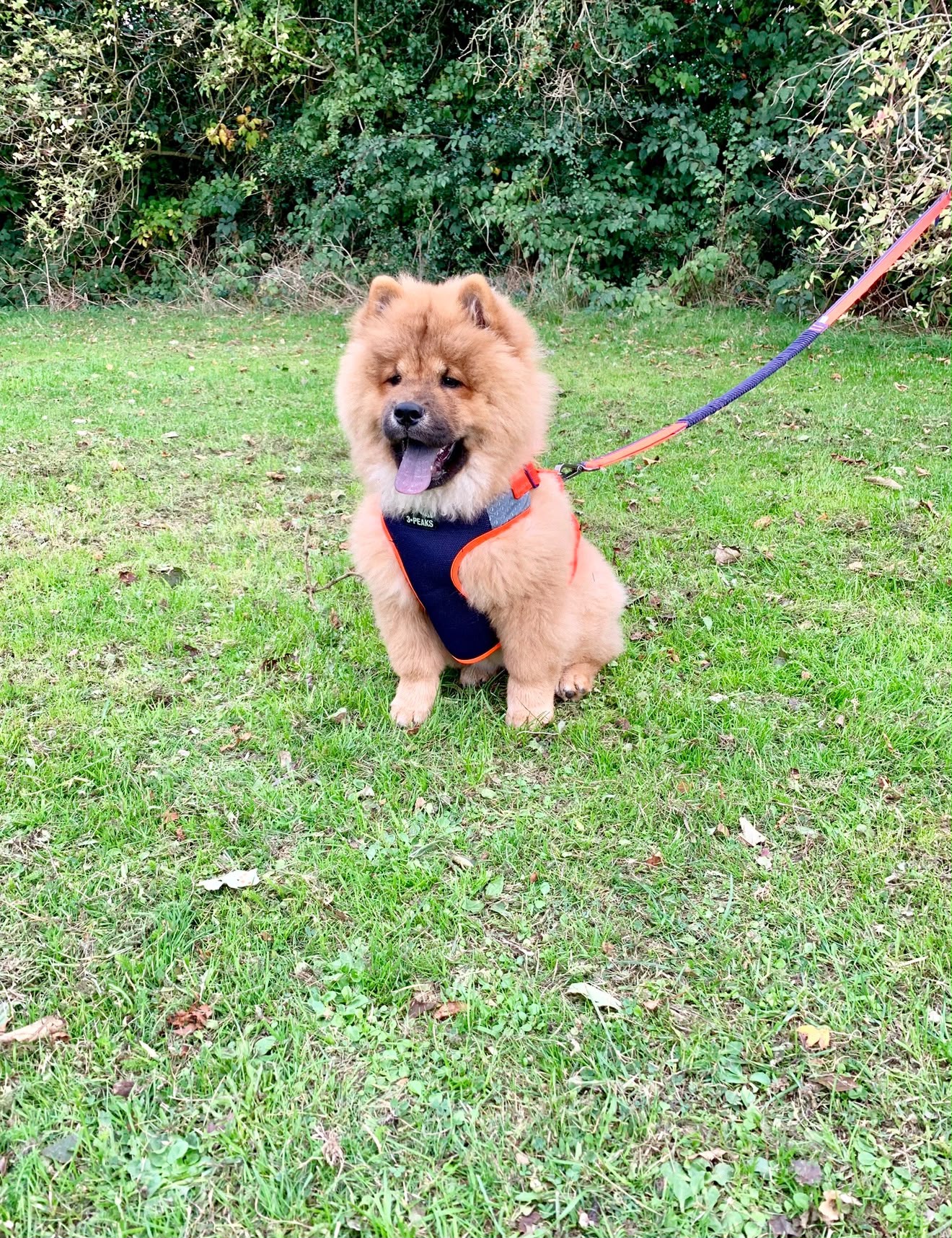
Your vet will set up vaccinations, parasite prevention and a microchip check. In those early visits, ask them to look at:
- Eyes. Chows are predisposed to entropion, where the eyelid rolls inwards. Squinting, watering or rubbing at the face needs a vet. See entropion and eye care.
- Weight and growth. Keep your puppy lean, because extra weight strains growing joints.
- Heat. Even puppies are at risk. Chows had the highest odds of heat-related illness of any breed in a 2020 study of UK vet records.
Joint care for growing puppies:
- Avoid lots of jumping and rough play
- Use gates on stairs. One Norwegian study found puppies of larger breeds who used stairs daily in their first three months had a higher risk of hip dysplasia
- Keep walks short and sniffy while they grow
Make vet visits positive from the start. See making vet visits easier.
Training a Chow puppy
Start the day they arrive, in tiny sessions. A minute or two, a few times a day.
The order I'd teach things in:
- A marker word. Say 'yes', then give a treat. Repeat until your puppy's ears prick up at the word.
- Their name. Say it once, reward when they look at you.
- A hand touch. The easiest way to move a puppy without pulling. See hand touch training.
- Sit and down. See sit and lie down.
- Recall games. Make coming to you the best thing in the world. See puppy recall games.
- Settle on a mat. The skill that makes life calm.
- Wearing a harness and walking on a lead. Short, positive and indoors first.
Force-free, always. The AKC itself says harsh training methods should be avoided with Chows. And find a good puppy class. Here's how to choose one.
If you'd like all of this laid out lesson by lesson, the puppy module of Chow Chow Foundations covers toilet training, crate training, socialisation and what to do when things go wrong.
Adolescence
Somewhere from around six months, your sweet puppy may suddenly forget everything. Recall goes. Pulling starts. They might become warier of new things.
That's adolescence, and it's normal. Keep going, keep it positive, and don't take it personally. Read Chow Chow adolescence.
A note on health. This guide is general information, not a diagnosis or a replacement for your vet. If you're worried about your puppy, or things aren't improving or are getting worse, we recommend you speak to your vet.
Sources
- The Royal Kennel Club, Chow Chow breed information, Find a Puppy and Assured Breeder Scheme
- PDSA, Chow Chow breed guide, including costs
- American Kennel Club, Chow Chow breed information
- FCI, Chow Chow breed standard No. 205
- American Veterinary Society of Animal Behavior, position statement on puppy socialisation
- British Veterinary Association, Canine Health Schemes breed statistics (2025)
- Orthopedic Foundation for Animals, CHIC programme requirements for the Chow Chow
- Hall, Carter and O'Neill (2020), heat-related illness in UK dogs, Scientific Reports
- Krontveit and others (2012), environmental risk factors for hip dysplasia in growing dogs, Norwegian School of Veterinary Science
- UK Government guidance on Lucy's Law and dog microchipping
- Pets4Homes, Chow Chow listings (checked October 2026)
Quick answers
How much is a Chow Chow puppy in the UK?
Prices vary widely. In October 2026, Chow Chow listings on Pets4Homes ranged from about £250 to £4,500. A low price is a warning sign, not a bargain. Health-tested parents and a good start in life matter far more than the price tag.
What age can a Chow Chow puppy leave its mum?
Not before eight weeks. In England, Scotland and Wales puppies must also be microchipped by eight weeks, and the breeder should register the chip before the puppy goes home.
What health tests should a Chow puppy's parents have?
In the UK, hip and elbow scores through the BVA and Royal Kennel Club schemes and an eye examination by a veterinary eye specialist. In the US, the OFA CHIC programme for Chows lists hips, elbows, eyes, thyroid and patellas.
Are Chow Chow puppies easy to toilet train?
Many are. Owners often describe Chows as very clean dogs. Take your puppy out after sleeping, eating, playing and every hour or two while awake, and reward them for going outside.
When should I start socialising my Chow puppy?
Straight away. The socialisation window runs roughly from 3 weeks to 12 to 14 weeks, so a good breeder starts it and you carry it on from day one, calmly and at your puppy's pace.
How do I find a good Chow Chow breeder?
Meet the puppies with their mum at the breeder's home, see the health test results, ask lots of questions and expect lots back. In the UK, Royal Kennel Club Assured Breeders have to meet extra standards. Walk away from anyone who rushes you.
How much grooming does a Chow puppy need?
Little and often. Short, calm brushing and handling sessions every day teach your puppy that grooming is normal, long before the adult coat comes in.
Can I get a Chow puppy if I work full time?
Only if you have proper cover. Young puppies need company, toilet trips and short meals throughout the day, so plan time off or reliable help for the first weeks and build alone time up gradually.
Now it's your turn
Copy the seven breeder questions above into the notes on your phone. Take them to every breeder or rescue you speak to, and tick off the answers as you go.
Already got your puppy? Tonight, do one minute of gentle brushing and paw touching, with a treat after each touch. That minute, repeated daily, is the start of a Chow who's happy to be groomed for life.
Want a tip like this every week? Join my free Sunday newsletter and get the Chow Chow Basics guide too.